

 |
| Products | |||
|
Enterprise Software Solutions Our software products consist of Mbrite Email Authentication Server (An enterprise email password authentication solution). Mbrite inBusiness (a visual reporting tool for business state of health), Mbrite inOffice (An enterprise office management solution) and Mbrite inProject (a visual reporting tool for a project state of health). |
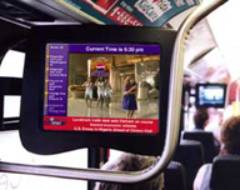
Mobile Media Solutions Mbrite's Media Network offers transit agencies a passenger communications solution unlike any other product in the market. With The Media Network on your vehicles, you can provide your passengers with ADA-compliant, GPS-triggered automated stop announcements, real-time route information and ride-enhancing news, weather and entertainment content. |
Biometric SmartCard Solutions Biometric sensor for authentication with smart cards Integrating a biometric sensor into a smart card reader just makes sense: not only is it more convenient to combine a smart card reader with a fingerprint scanner in one device. Fingerprint sensors in smart card readers also add to the security by bringing the biometric sensor closer to the smart card system. A biometric smart card protects biometric data - a great approach for someone concerned about privacy issues, because fingerprint templates never leave a smart card unprotected. In case of a match on card system, they stay inside the card from the time of the first enrolment. Integrating a fingerprint scanner into a smart card reader increases security by adding "something you are" to the authentication process. Smart cards provide the "something you have" factor. The third factor, "something you know" is usually represented by a PIN. Integrating a biometric sensor with a smart card reader adds to the privacy of someone using this system for authentication because the fingerprint template resides on the smart card. It can be directly matched with the scanned fingerprint rather than traveling though a network to be matched on the backend. This process is called match on card (MOC). How it works?The biometric fingerprint sensor takes a digital picture of a fingerprint. This fingerprint scan detects ridges and valleys of the fingerprint and converts them into ones and zeroes. Complex algorithms analyze this raw biometric scan to identify characteristics of the fingerprint, the so-called minutiae. Minutiae are stored in a so-called fingerprint template, a data file usually smaller than the the initial scan. Up to 200 minutiae are stored in a template, but only a subset of these has to match for identification or verification. in most systems, if 10 to 20 minutiae match, the fingerprint is considered a match. In today's smart card systems typically about 40 minutiae are stored, because of the space restrictions. |
|
|
|
